Your Custom Text Here
I make contemporary baskets using a technique called ply-splitting. This is a unique textile technique in which plied cords -- which I usually make myself -- are pulled through other cords.
Ply-splitting is a tradition found mainly in the Thar Desert between India and Pakistan. For hundreds of years, men made cords from goat hair, and then used the cords to make ply-split braided girths and decorative necklaces for their camels.
In 1993, I learned the basic structures of ply-splitting in a 3-day workshop at the Oregon School of Arts and Crafts with Peter Collingwood (British weaver and author of several books including “The Techniques of Ply-Split Braiding”, published in 1998) . After lots of experimenting, and making ply-split braids, ornaments, jewelry, and mats, I made my first ply-split basket in 1998.
I have self-published two instruction books with step-by-step photos, “How to Make Ply-Split Baskets” and “How to Make Ply-Split Braids & Bands”. My husband John Brockway and I have made several instructional videos for my YouTube channel.
I offer individual instruction in my studio. To encourage CBBG members to try ply-splitting, I’m offering free PDFs of designs from my instruction books, as well as mentoring.
In addition to ply-splitting, I have also been exploring, teaching, and writing about another technique called tablet weaving. My recent ply-split baskets feature designs from the tablet-woven belts from East Telemark, Norway. I make the cords from paper ribbon following a tablet-weaving threading diagram. Once the cords are arranged and split correctly in the base, the designs appear automatically as I continue splitting!
Website: lindahendrickson.com
Instagram: instagram.com/lindahendricksonpdx
YouTube: youtube.com/lindahendrickson
I make contemporary baskets using a technique called ply-splitting. This is a unique textile technique in which plied cords -- which I usually make myself -- are pulled through other cords.
Ply-splitting is a tradition found mainly in the Thar Desert between India and Pakistan. For hundreds of years, men made cords from goat hair, and then used the cords to make ply-split braided girths and decorative necklaces for their camels.
In 1993, I learned the basic structures of ply-splitting in a 3-day workshop at the Oregon School of Arts and Crafts with Peter Collingwood (British weaver and author of several books including “The Techniques of Ply-Split Braiding”, published in 1998) . After lots of experimenting, and making ply-split braids, ornaments, jewelry, and mats, I made my first ply-split basket in 1998.
I have self-published two instruction books with step-by-step photos, “How to Make Ply-Split Baskets” and “How to Make Ply-Split Braids & Bands”. My husband John Brockway and I have made several instructional videos for my YouTube channel.
I offer individual instruction in my studio. To encourage CBBG members to try ply-splitting, I’m offering free PDFs of designs from my instruction books, as well as mentoring.
In addition to ply-splitting, I have also been exploring, teaching, and writing about another technique called tablet weaving. My recent ply-split baskets feature designs from the tablet-woven belts from East Telemark, Norway. I make the cords from paper ribbon following a tablet-weaving threading diagram. Once the cords are arranged and split correctly in the base, the designs appear automatically as I continue splitting!
Website: lindahendrickson.com
Instagram: instagram.com/lindahendricksonpdx
YouTube: youtube.com/lindahendrickson
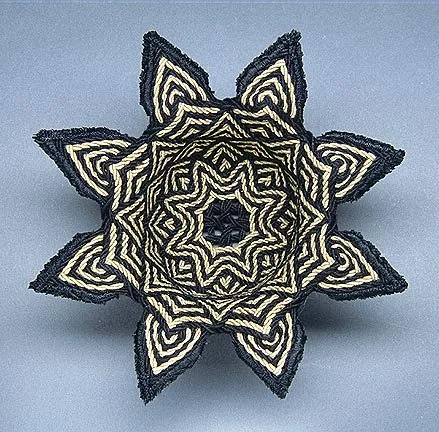
Mandala, 2004. Cords made from perle cotton. Single-course oblique twining (SCOT) with machine stitching around the “petals”.
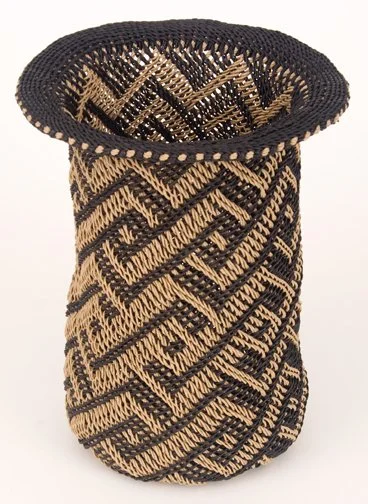
Bushongo Interlacements #4, 2007. Paper ribbon cords. Single-course oblique twining. Design inspired by Bushongo cut-pile raffia cloth in “African Designs from Traditional Sources”.
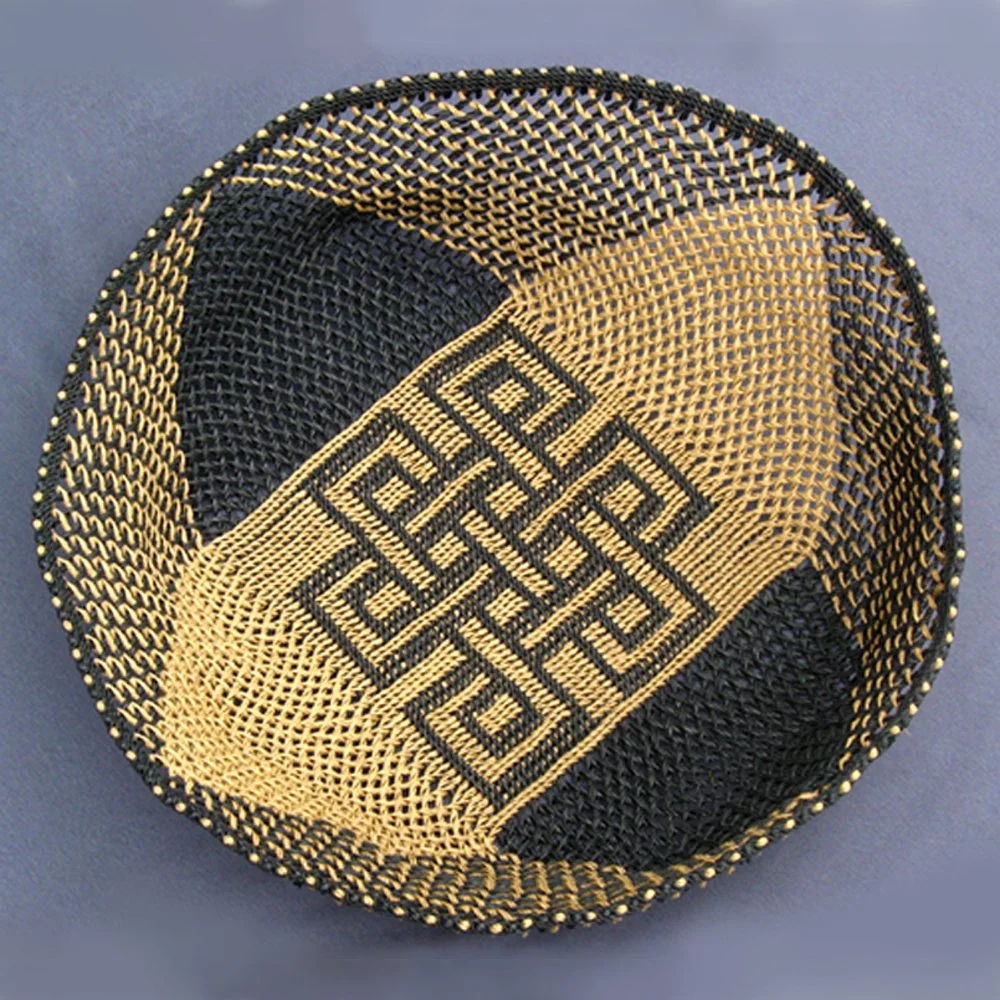
Endless Knot, 2009. Paper ribbon cords. Single-course oblique twining (SCOT) for the base and plain oblique twining (POT) with extra twist between the splittings for the sides.
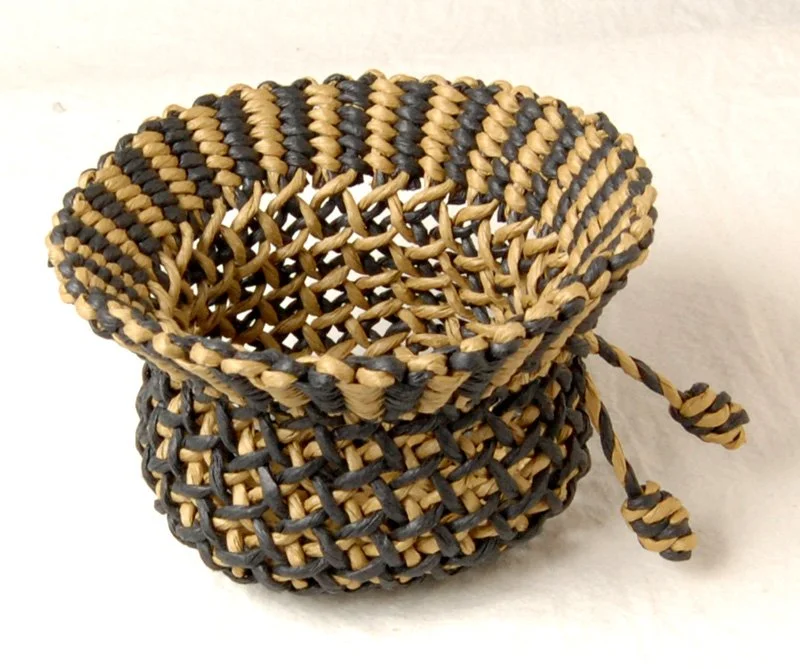
Waffle Basket, 2010. 2-ply, 2-color cords made from paper ribbon. Plain oblique twining (POT) with a full twist between the splittings. 1 of the 12 baskets in my book “How to Make Ply-Split Baskets".
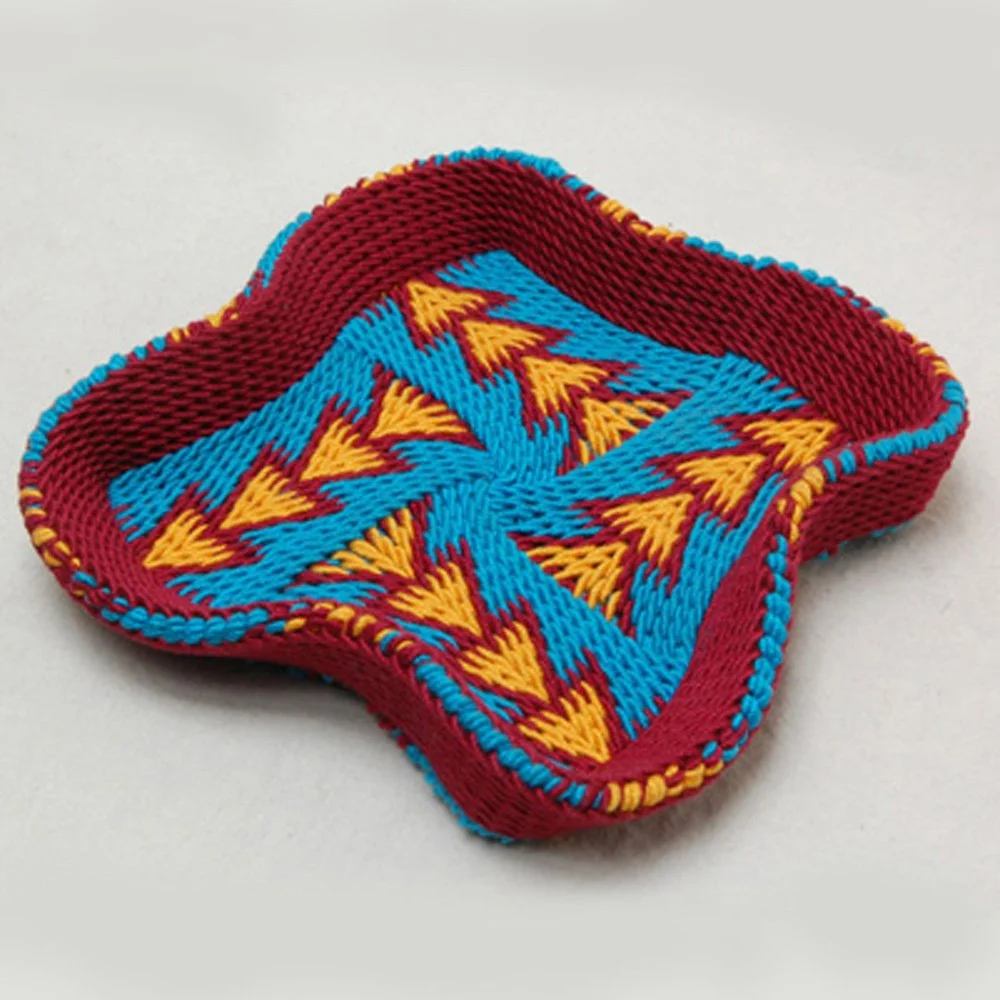
Four Directions, 2011. Cords made from perle cotton following a tablet-weaving threading diagram.
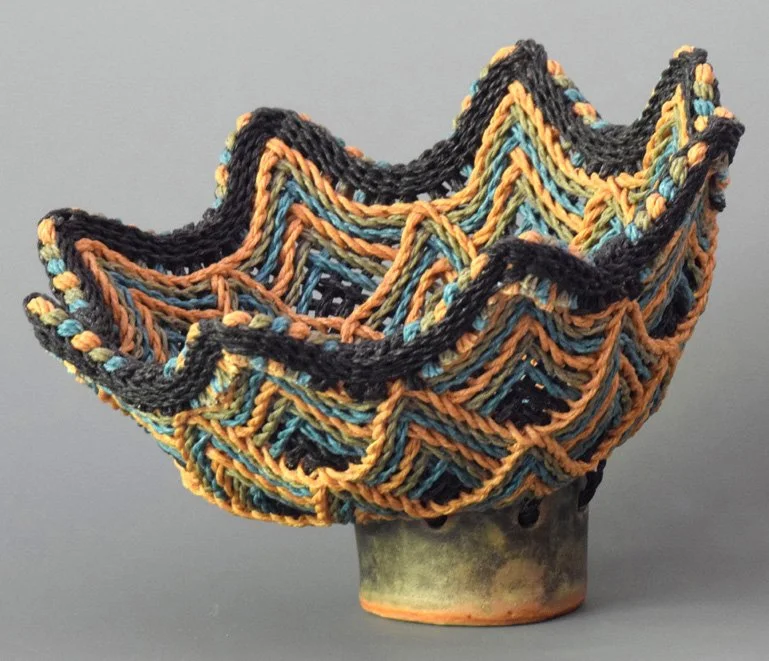
Mandala with Pottery Base, 2015. Cords made from waxed linen. Single-course oblique twining (SCOT).
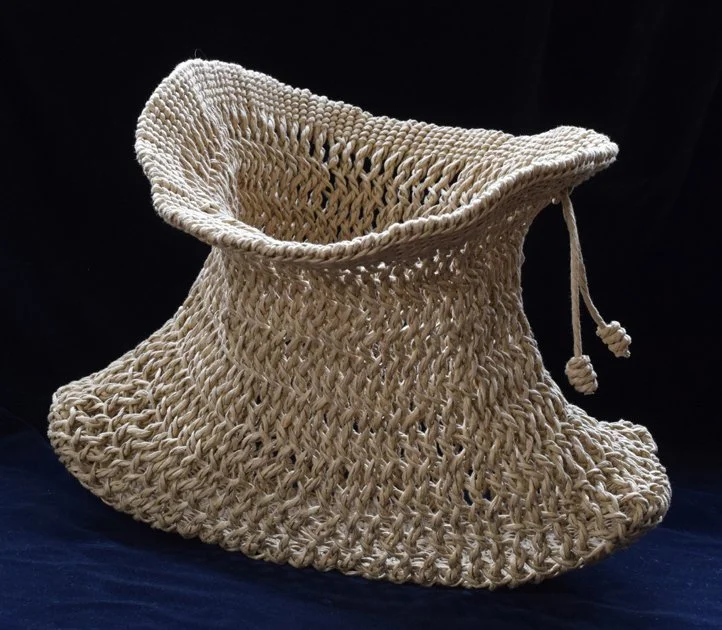
A Mind of Her Own, 2018. Commercially-made Danish cord worked in twined interlinking.
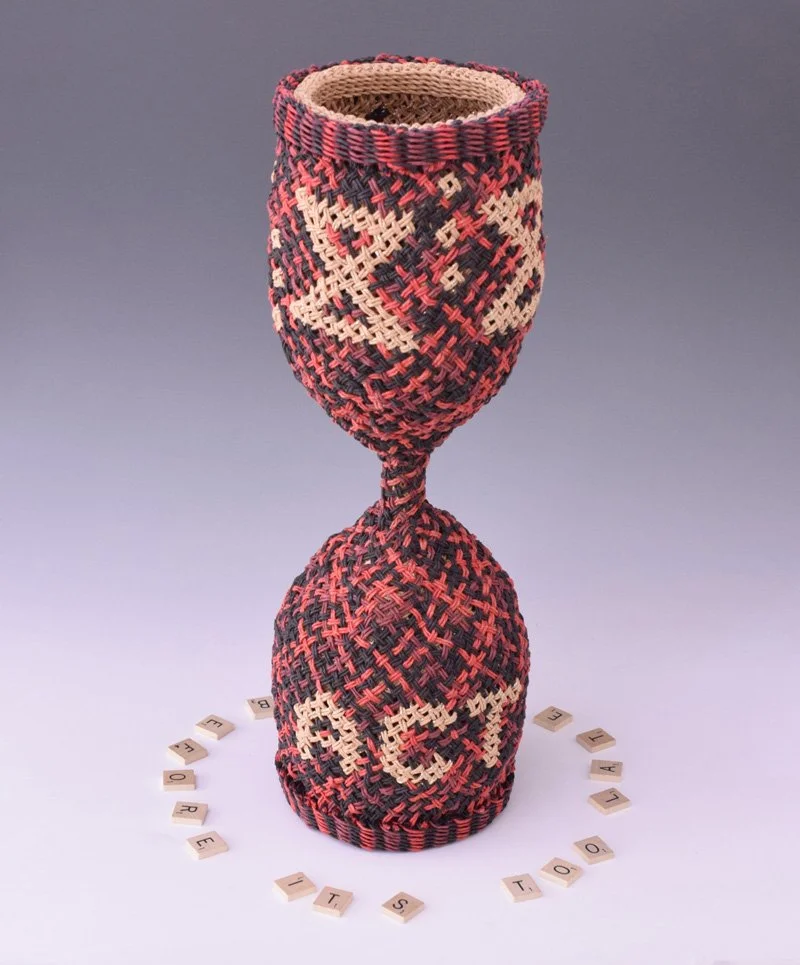
ACT NOW, 2020. Cords made from paper ribbon. Two-layered oblique interlacing (TLOI). This is the first of several baskets I made relating to climate change.
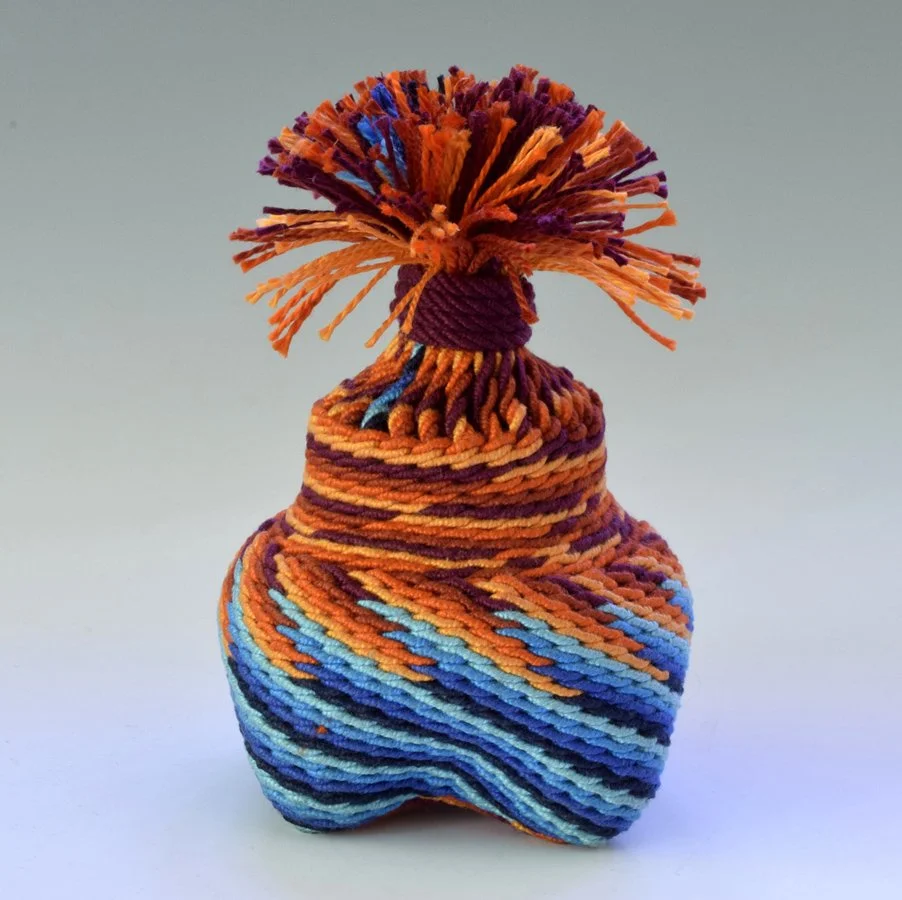
Fire & Ice #4, 2023. Cords made from perle cotton. Single-course twining and single-course oblique twining (SCOT).
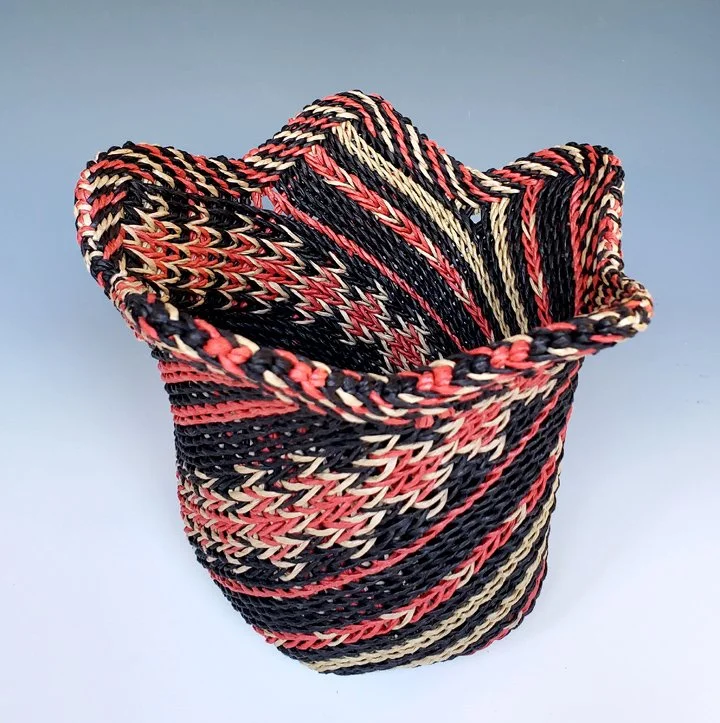
East Telemark #1, 2024. Cords made from paper ribbon following a tablet-weaving threading diagram.
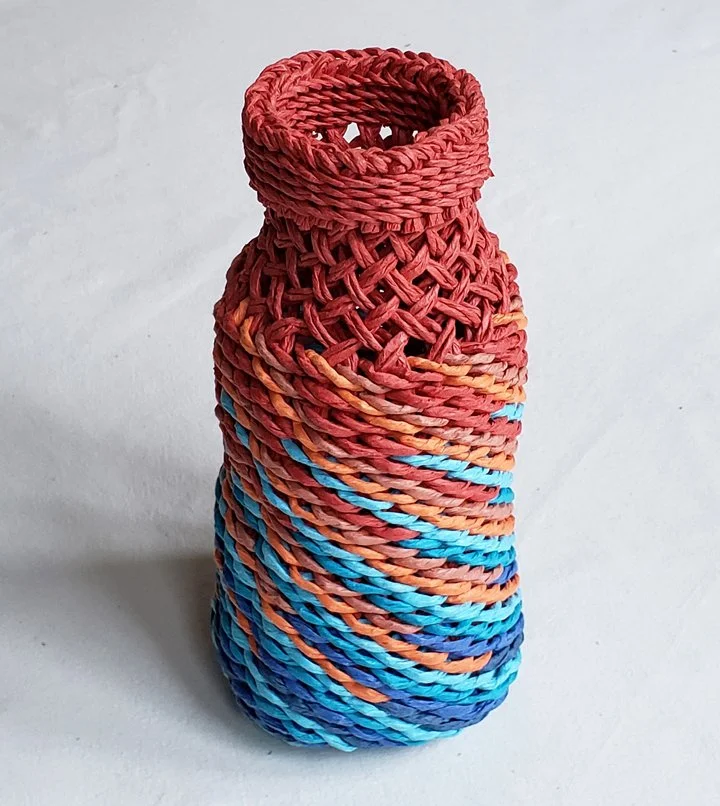
Fire & Ice #7, 2025. Cords made from paper ribbon. Single-course twining and plain oblique twining (POT).
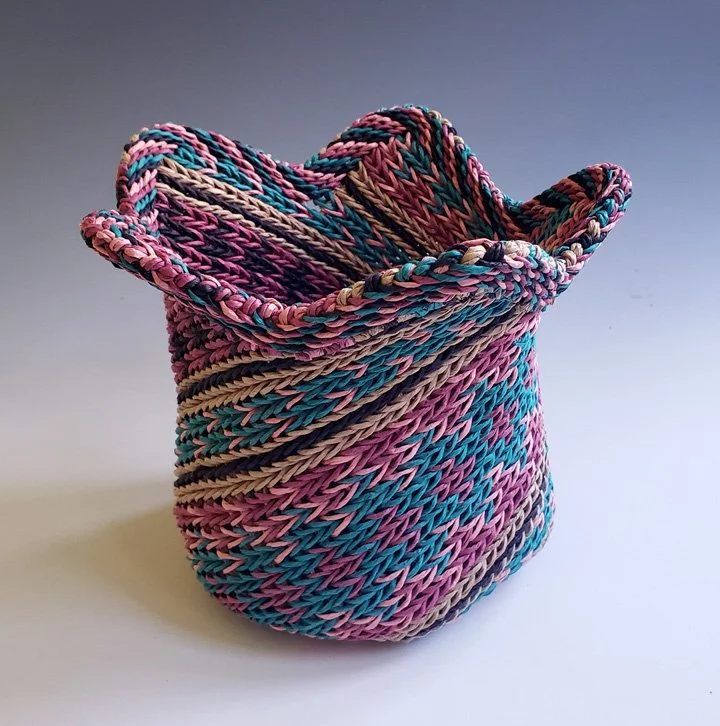
East Telemark #7, side 1, 2026. Cords made from paper ribbon following a tablet-weaving threading diagram.
Quisque iaculis facilisis lacinia. Mauris euismod pellentesque tellus sit amet mollis.